How to get listed on Google Maps
Last modified on August 3, 2021
There are many ways for local businesses to market their brand online today. The majority of your potential customers continue to use Google to locate nearby businesses, businesses where they will spend their hard-earned money.
In fact, 80% of searches with “local intent” result in a conversion. Which begs the question: “What is the best strategy to capture attention from local searches on Google?” The answer is through SEO on Google Maps.
What is Google Maps SEO?
Google Maps SEO is the process of optimizing your brand’s online presence in Google Maps to increase your brand’s online visibility. When you search for a query with local intent on Google, you’ll often see something like this:
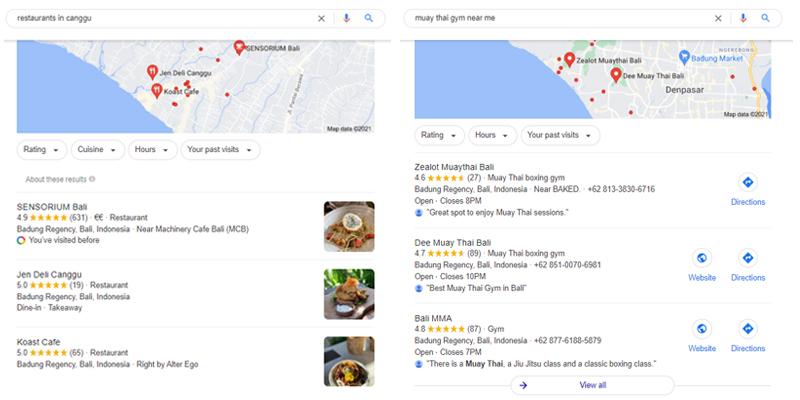
Google Maps marketing employs a variety of strategies and tactics to help your business achieve one of three positions on local map packs. This result is called the “Local -3 Pack.”
Why is Google Maps SEO so important?
The reason why every local business should care about their position on Google Maps is simple: increasing brand visibility. It’s no surprise that Google is the most used search engine. But what about Google Maps specifically?
According to a study conducted by The Manifest, about 70% of smartphone users say they use Google Maps as their primary source. Additionally, a growing percentage of Google’s 3.5 billion daily queries are considered to have local intent. According to Google, 83% of people who visited a store did so after searching online.
Therefore, any business that wants to be found in this day and age must harness the potential of Google Maps marketing. However, before you can rank on Google Maps, make sure that your Google My Business profile is set up and optimized.
Google Maps and Local SEO
Local SEO optimization for Google Maps, which is focused exclusively on Google Maps marketing, has quickly become an important component of local SEO. For any business that caters to a local audience, being at the top of Google Maps listings (both in the local 3-pack and in Google Maps search results) is extremely valuable.
All types of businesses benefit from local map optimization because it brings highly qualified local traffic. Therefore, Google Maps optimization has become one of the most effective local SEO marketing efforts.
Local results are prioritized based on relevance, distance, and prominence. These factors work together to help us find the best match for your search. For example, our algorithms may determine that a business farther from where you live is more likely to have what you’re looking for than a business closer to you, and therefore rank it higher in local results.
Relevance
Relevance is how well a local business profile matches what someone is searching for. Fill in the blanks with complete and detailed information about your business to help Google better understand your business and match your profile to relevant searches.
Distance
Distance takes into account how far away each potential search result is from the location term used in the search. If a user doesn’t specify a location in their search, we calculate the distance based on the information we have about their location.
Prominence
A business’s prominence refers to its notoriety. Some locations have greater offline visibility, and search results try to reflect this in local rankings. Famous museums, renowned hotels, and well-known store brands, for example, are likely to appear prominently in local search results.
Visibility is also determined by the information Google gathers about a business from various sources on the Internet, such as links, articles, and directories. The number of Google reviews and review score factor into local search rankings. More positive reviews and ratings can help your business rank locally. Since your position in web results is also important, search engine optimization (SEO) best practices apply.
For this reason, be sure to encourage your customers to leave reviews (positive reviews) and make sure to fill out all the information when you create your Google My Business account.
You should also check out these 15 tips for getting more Google reviews and consistently respond to all reviews on your GMB account so your potential customers feel like you’re a business.
Google Maps SEO Checklist
You’re probably aware of the need to fully fill out your Google My Business profile. However, SEO on Google Maps requires comprehensive adjustments on multiple levels, and there’s rarely a one-size-fits-all solution.
Simply follow the checklist below to improve your business’s chances of appearing in Google Maps for relevant searches.
- Claim or create a listing for your business.
- Fill in the blanks with the following information:
– The service area and address are correct.
– Business days / opening hours
– Website/URL where they can make a purchase
– List your specific offerings. Clearly and concisely. Try to incorporate keywords naturally whenever possible. - Choose the most relevant and common categories for your business.
- Make sure information is consistent across the web.
- Include high quality images.
- Check and double-check all your information.
- Cultivate positive feedback.
- In Google My Business you can talk about your business.
- List your business in other directories.
- Use analytics to refine your strategies.
Analysis and monitoring of Google My Business results
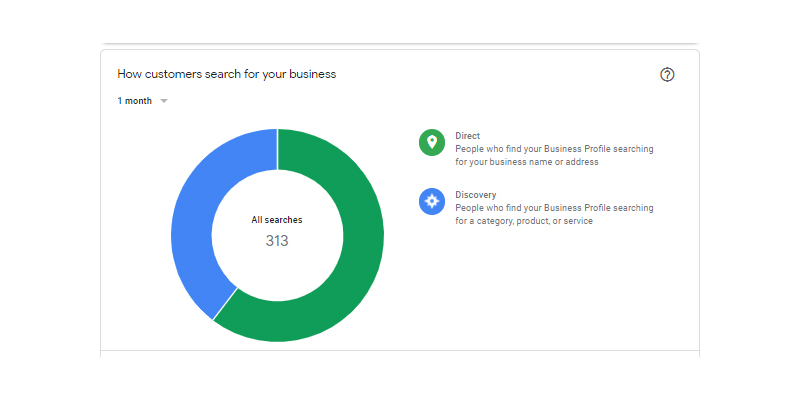
In every element of SEO and internet marketing, tracking your performance is essential, and Google My Business is no exception. In your Google My Business account, you will find the majority of your profile analytics.
By logging into your account and clicking on “insights” on the far left, you will get this information.
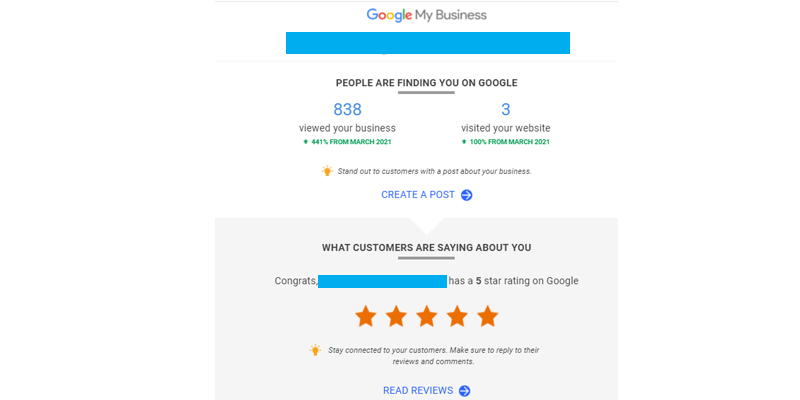
You should then be able to visualize things like:
- What exact search queries resulted in your listing being displayed?
- The number of times your listing appeared in a Google search.
- How often your listing appeared in Google Maps.
- What actions were taken by customers? (e.g. visiting your website, requesting directions, making phone calls).
- Where do customers go to get information about the company?
- What days of the week do you receive the most phone calls?
- How many people have viewed your images, and how does that compare to your competitors?
Customers use Google services to locate your business
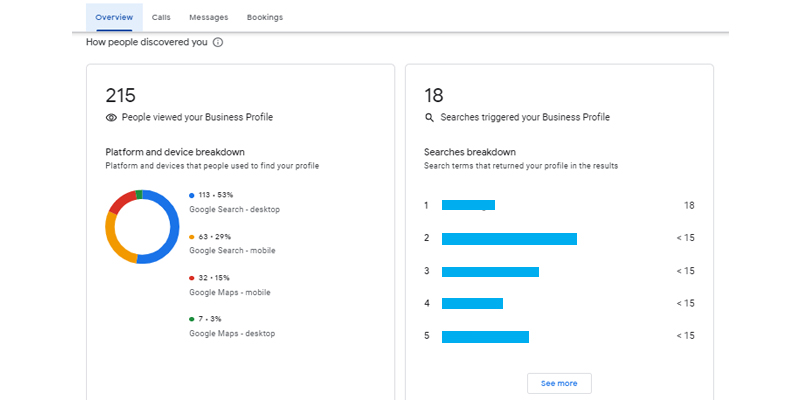
The types of queries that lead to your website are a crucial metric to monitor. This will tell you how many people are searching for you by name and how many people are finding you using keywords related to your brand, region, and industry. This can help you determine the proportion of new customers versus repeat customers who are visiting your site through Google.
Where do customers see your business on Google?
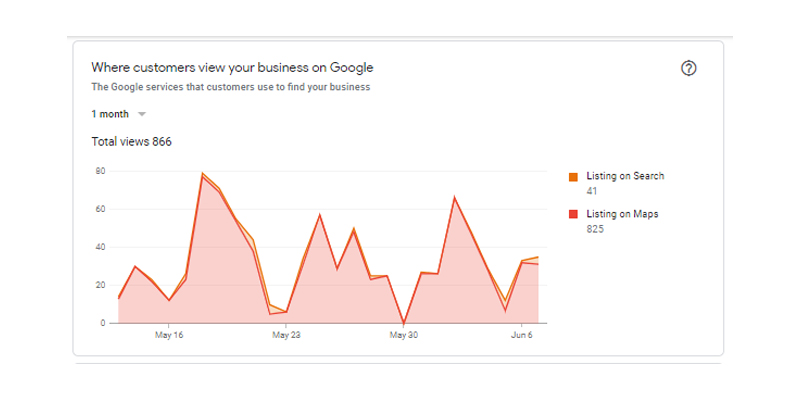
This part will tell you how often you’re found in general searches versus map listings. When combined with the first metric, you can determine how effective your Google Maps listings are at recruiting new customers. Monitor these numbers as you make changes to ensure you’re making the right decisions and moving in the right direction.
Actions taken by list visitors
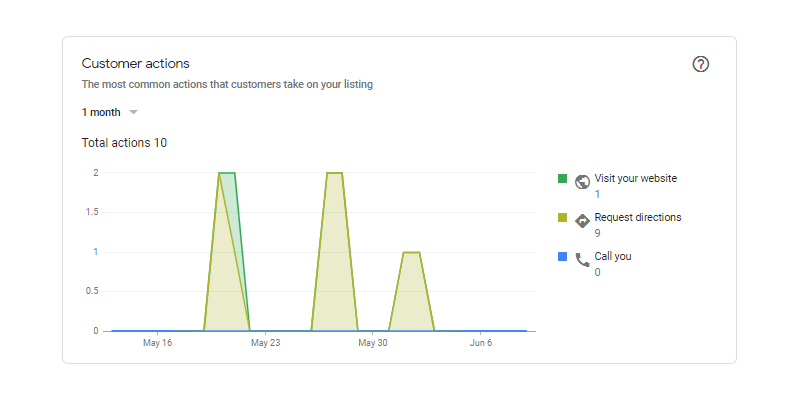
Customer actions in response to your listing Customer actions show you what people are doing in response to your listing. You’ll know if your ad is driving people to your business, website, or another form of communication. When you start optimizing your listing, this is probably the most important metric to consider. Your best chance for success is to work on improving engagement and interactions with consumers.
Where do customers come from?
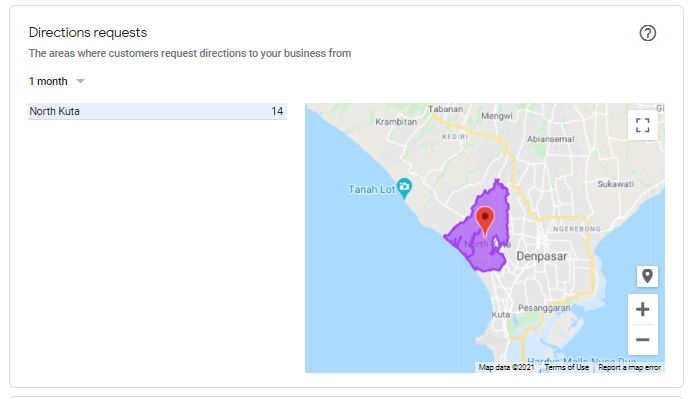
Where people are asking for directions Directions shows where customers are asking for directions to your business. With this data, you can start to localize and better target your other marketing efforts, as well as tweak your target keywords.
Your photo viewing performance
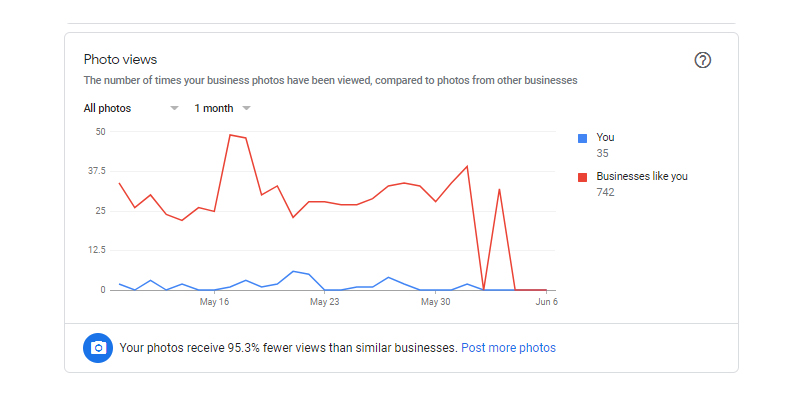
The “Photo Views & Photo Quantity” section shows how your photos are performing compared to your competitors. It also shows the proportion of photos taken by you versus those taken by your customers. Humans respond positively to engaging images, so take the time to take the best possible images of your business.
Conclusion
While it’s nice to learn the basics of Google My Business, comprehensive optimizations and continued progress are what really separate the wheat from the chaff. Regularly test various optimizations in your industry and market and track your results closely. When in doubt, follow your gut and do what’s best for your customer. They should always come first.
By investing in Google Maps marketing, you will be able to consistently attract local leads to your business. If you have any questions, leave them in the comments section below or on Twitter, and I will be happy to answer them!
.

Passionate about the web and entrepreneurship, I founded Digitiz in 2016. My goal is to share my experience with you and save you time in choosing your tools.
Similar articles