
What is the long tail in SEO?
Last modified August 4, 2021
When you are preparing the SEO strategy for your website, you have surely heard several times about the long tail (or long tail in English). What is this concept? How is it different from generic keywords? How to find these expressions? How to apply this strategy? Here are all the answers to become a long tail pro!
Definition of the long tail in SEO
In the context of natural referencing, the long tail refers to all the keywords which include expressions composed of several words. The long tail is thus made up of keywords with low search volumes and which are likely to be less competitive on search engines. These keywords generally each attract a few visitors but the total can represent a significant portion of a website’s overall traffic.
The difference between generic and long-tail keywords
To put it very simply, we can differentiate at least two levels of keywords based on search volumes, competition and qualification. What interest will you tell me? Above all, this allows you to choose the keywords that will be most interesting for your site and where it will be smartest to concentrate your efforts to obtain the best return on investment.
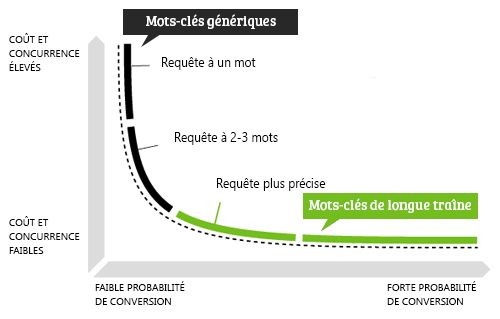
THE generic keywords are the ones with the highest search volumes and which are generally very competitive. We can add to this that these keywords are low-skilled since they target a very broad problem. To illustrate, we can take a look at the keyword “boiler maintenance” which is a query estimated at 4,400 searches per month. The fact that there are many advertisers who have purchased Adwords is already an indication of the high competition on this query. Regarding qualification, even if a small portion of Internet users may be looking to directly request a quote, the vast majority are probably looking for information.
THE long tail keywords have for their part much lower search volumesare generally less competitive and a lot more qualified. Returning to our boiler example, this time we can take the query “gas boiler maintenance price”. The search volume is much lower (320). On the other hand, the competition is already more acceptable and we know better the intention of the Internet user who is already more likely to be converted.
Google search suggestions
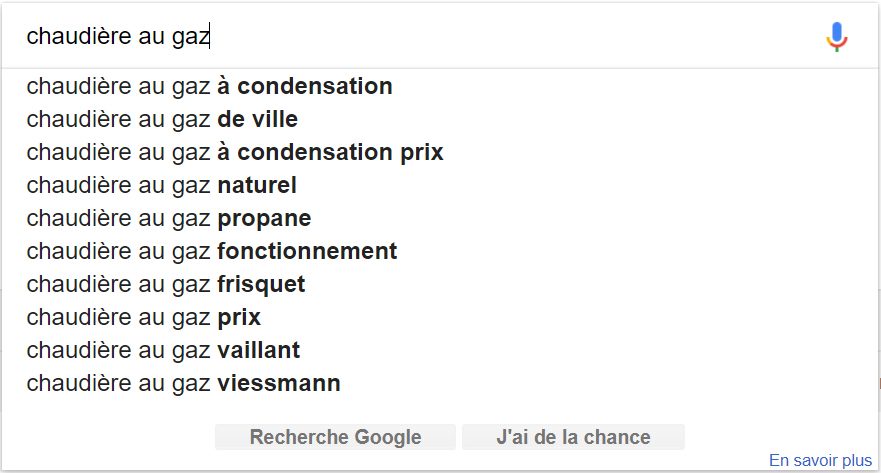
If you want to position yourself on Google using the long tail strategy, why not use the suggestions that Google gives us directly?
Just write the keyword of your basic theme in the search engine and you will see that Google’s “completion” functionality shows you a list of very interesting suggestions.
Related searches
Another good “clue” left by Google for finding long-tail keywords are searches related to your first search. These are related searches that are performed by other users on Google based on the one you have performed at that time. So you will see these very interesting suggestions appear at the bottom of the results page.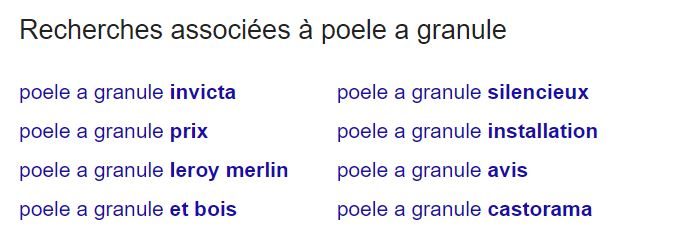
Use local SEO
Many businesses that offer services or sell products in a city or geographic area don’t always consider the power of local SEO. However, many mobile devices and browsers such as Chrome can know your location and thus allow Google to adjust the results pages
It is therefore quite obvious that you can add the name of your city at the end of your strategic keywords in order to be better positioned in local searches.
Keyword research tools
To find keyword ideas for your long tail, there are a multitude of free and paid specialist generators.
There is of course Google Keyword Planner but that requires having at least one Adwords campaign and I find that very restrictive.
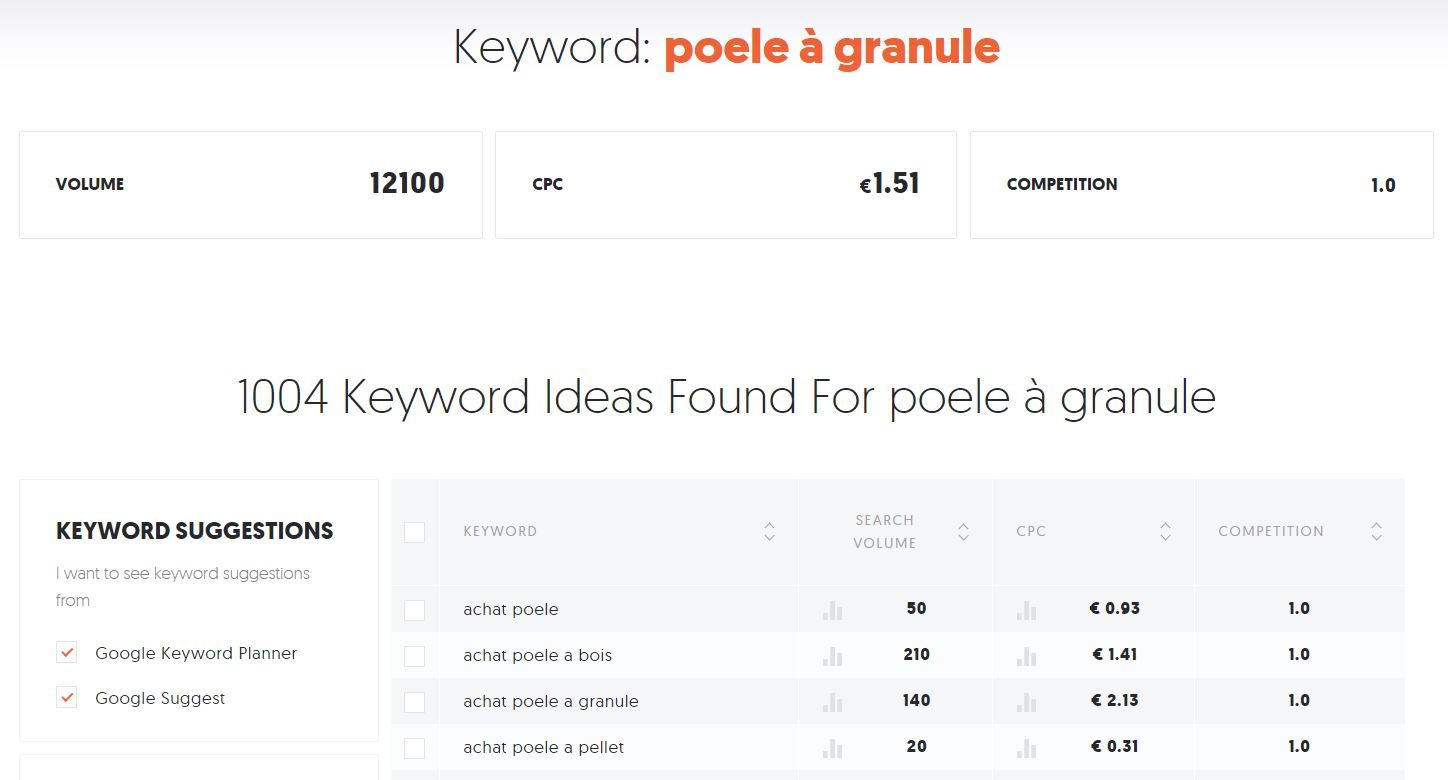
The best free alternative is Ubersuggest which was recently bought by Neil Patel. From a first generic keyword you will have hundreds of ideas for other long-tail keywords that you can use. In addition to that, the tool allows you to have search volumes and a competition indicator which is obviously very practical!
Analyze competitors
In order to analyze your competitors, you can first use the Freemium version of Yooda Insight by simply creating an account. Even if the results displayed are limited, this will above all allow you to have an idea of the main keywords which are a source of traffic for your competitors with an indication of search volumes. Other tools also exist such as Ranxplorer or SEMrush which is even more complete. For the latter, I invite you to test their analysis functionality with this widget:
The objective is above all to analyze at least three or four of your competitors to “steal” them some ideas for long-tail keywords on which they are already positioned and thus do better than them!
This may sound stupid, but many articles don’t actually explain how to apply the long tail once you have a good list of keywords. The answer is very simple: use them in your content.
The first thing to do to be positioned on Google is to forget about Google. It may seem paradoxical, but you should know that your content is above all intended for people. The best way to create interesting content is to put yourself in the Internet user’s shoes and answer all the questions they might have about an issue.
If we take the query “gas boiler maintenance price”, one way of processing it will be to produce content of this type:
- A price table with different scenarios
- A paragraph “Why maintain your boiler”
- A paragraph “The advantages of a maintenance contract”
- A paragraph “The stages of boiler maintenance by a professional”
- A link to a quote form
Of course I don’t know much about boilers, but by seeing the best referenced pages, you can already have an idea of what to include in the article. The goal is to respond as exhaustively as possible to a request and to have the most comprehensive content possible.
To end up on the long tail
I have described to you the simple steps that work in terms of SEO for my sites and which allow me to generate thousands of visits every day. So there’s no reason why it shouldn’t work for you. With a little work and a lot of patience, you will be able to gain more visitors and, above all, those who will be qualified.
As you produce your pages for your keywords, don’t forget to regularly measure your rankings and the traffic obtained for these pages so that you can optimize your content and your strategy. Finally, don’t forget that netlinking is also an important factor for SEO that should not be neglected.
If you have any other tips for finding long-tail keywords, let me know in the comments 🙂

Passionate about the web and entrepreneurship, I founded Digitiz in 2016. My goal is to pass on my experience to you and to be able to save you time in choosing your tools.
Similar articles