the differences between natural and paid referencing
Last modification on July 18, 2021 by Loïc Frissard
Natural SEO and paid SEO are two different SEO approaches but ultimately have the same goal: Generate maximum traffic on search engines. Explanation of the particularities of these 2 methods and a small comparison with an infographic!
Natural referencing
Natural referencing, also called SEO (Search Engine Optimization), is used to make the pages of a website appear in the organic results of search engines, mainly Google. The objective is to work on your keywords to be best positioned in these results and to obtain visibility naturally.
The particularity of SEO is that the effects of the actions taken are only felt after several months on traffic while Google indexes your pages and compares them with others.
Among these actions we can cite technical optimization (On-site and Off-site), netlinking, and above all the production of quality text content which is today one of the primary SEO criteria.
Paid SEO
Conversely, paid referencing or SEA (Search Engine Advertising) is defined by the purchase of sponsored links in advertising spaces with the aim of quickly positioning yourself on specific keywords. The principle of paid referencing is to put the best bid on the keywords you are targeting to have the greatest chance of being visible compared to your competitors.
There are several types of paid search campaigns:
- The “search only” campaign where ads appear above or alongside other search results.
- The “display only” campaign where advertisements are then broadcast on Google partner sites such as YouTube and other sites selling advertising space.
- The “search with selective display” campaign, which consists of a mix of the search and display campaign.
Paid SEO is often a choice to consider to fill the gap in natural referencing. Instead of waiting until your site is well positioned or if you still lack notoriety, SEA is a quick and easy method to be visible on search engines. You can position yourself very quickly on the first page of Google results if you choose a good SEA agency and you have the appropriate budget.
Advantages and disadvantages of SEO and SEA
Duration of the campaign:
SEO takes time for your work to start to take effect and produce real results. This also requires maintaining this work in a sustainable and long-term manner to continue to rise in search results.
Paid SEO requires a little learning time but also doing A/B testing to improve your conversions and know if your ROI is profitable or not. On the other hand, campaigns are often short-lived and renewed regularly.
Costs :
The cost of SEO is relatively fixed, independent of the volume of clicks, but requires knowing good practices and resources to produce content.
Paid campaigns require a lot of money, especially in competitive sectors. This can very quickly become costly to the detriment of other marketing actions that you could put in place.
Return on Investment:
The return on investment from natural referencing will continue to last in the long term. The results will be visible long after an SEO consultant’s service is completed.
On the other hand, paid referencing has immediate results and can generate visitors when launching a site or a new offer.
Impact :
If your site appears in organic results, it will tend to inspire more trust than sponsored links. Once your site obtains a good ranking, your brand will quickly be well perceived by your prospects.
Paid traffic is often targeted to sales pages, meaning that people who arrive at the site through this channel are more likely to purchase than those who came through an organic link.
Google updates:
When it comes to natural referencing, many things are out of control and your competitors can use black hat SEO techniques (at their own risk) to get ahead of you. Algorithms change regularly, becoming more and more strict, and tomorrow’s criteria may no longer be the same criteria as today.
In paid SEO, your Adwords campaigns have little or no risk of being impacted by updates to the Google algorithm. This ensures a regular flow of visitors as long as you put your hand in your pocket!
The main differences between SEO and SEA in infographics:
In this infographic that I created, here are the main differences in SEO and SEA:
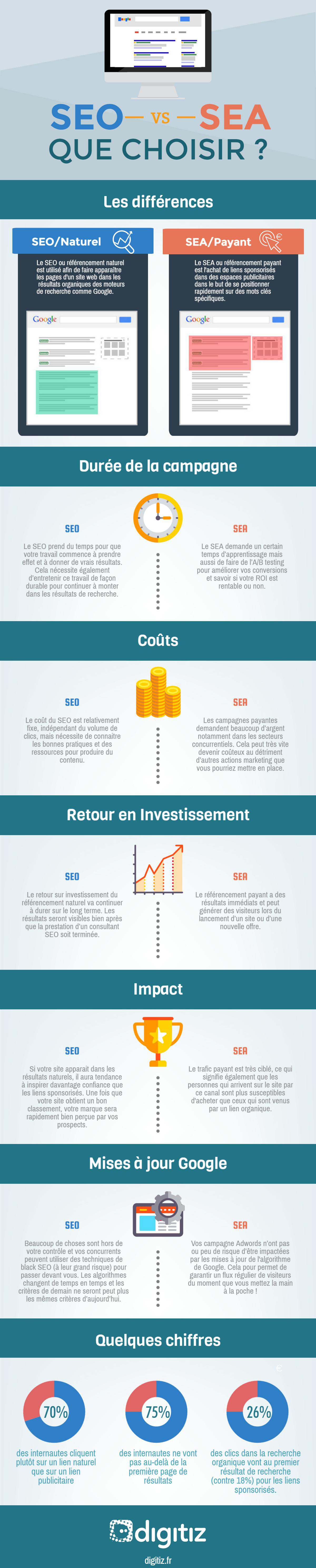
Do not hesitate to share the infographic on your blog, remembering to cite the source.
So, natural or paid referencing?
Again, this depends on your website’s marketing goals. I would rather tend to recommend natural referencing, particularly when I implement Inbound Marketing strategies. It is difficult to give an objective opinion, especially since it will depend on several criteria and the context. However, here are some facts that may be interesting to take into account:
- 70% of Internet users click on a natural link rather than an advertising link
- 75% of Internet users do not go beyond the first page of results
- 26% of clicks in organic search go to the first search result (compared to 18%) for the first sponsored links.
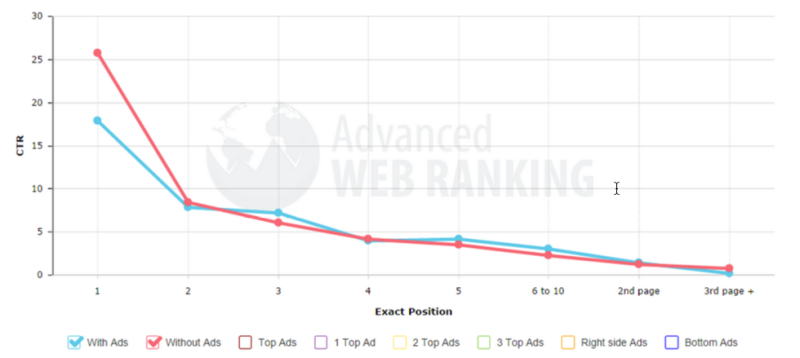 Source: moz.com
Ultimately, each of the two practices has its respective advantages and disadvantages!
You can also combine natural and paid referencing which are often complementary to get the best benefits.
If you do not yet know which strategy to adopt, there are also many service providers such as the Pixalione agency who are able to advise you on both SEO and SEA.
Similar articles