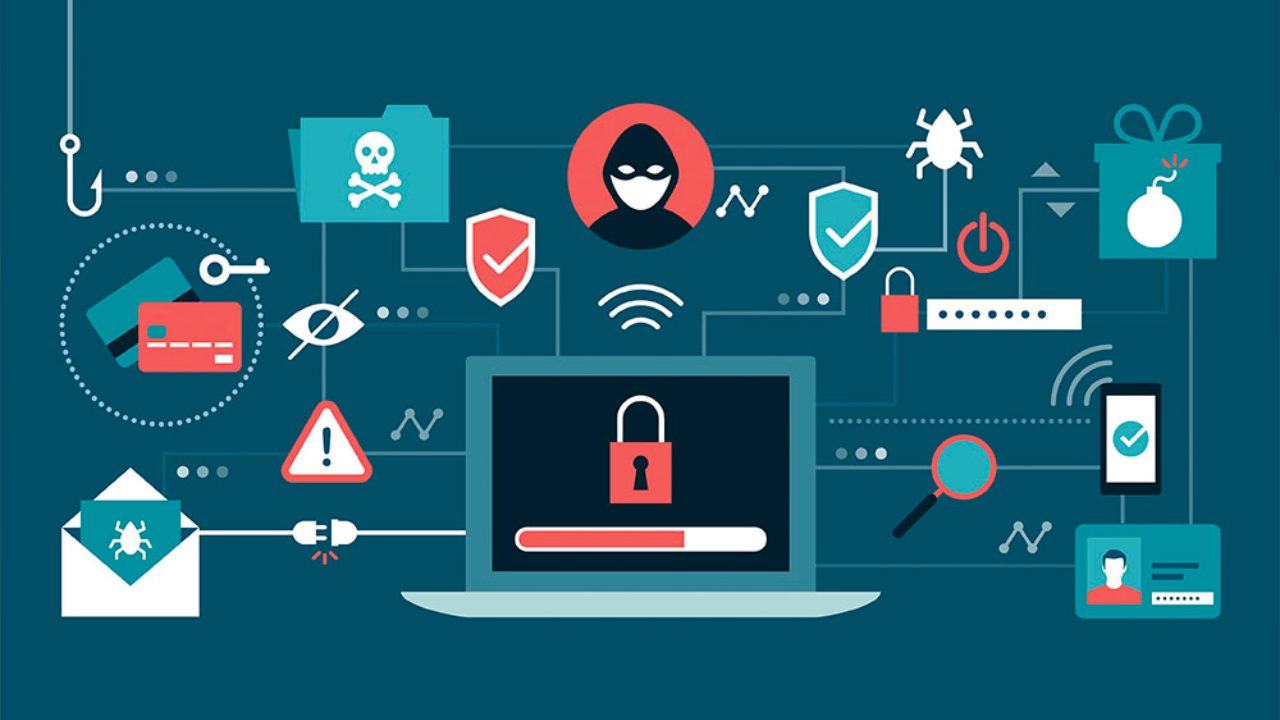
How to combat cybersecurity risks?
Last modified August 4, 2021
New and constantly evolving Internet technologies offer unseen possibilities and benefits. They reduce operating costs, improve employee productivity and increase revenue. However, with great opportunities come potential risks. All businesses face the same challenges, such as data breaches, regardless of their size, staff and resources. Here are three cybersecurity questions facing businesses today.
Protecting your business from cybercrime
According to recent reports, an average of 18 Internet users per second, or 1.5 million users per day, fall victim to cybercrime. With businesses increasingly reliant on data availability and 24-hour connectivity, the cost of data breaches is higher than ever. SMBs may never have fully recovered from the financial losses and reputational damage caused by a single successful attack or negligent employee escape. With the rapid emergence of new threats to SMBs, malicious applications, denial of service attacks, phishing, spyware and malware are all part of today’s business landscape.
To combat cybercrime, it is necessary to choose the right IT provider who will implement a unified next-generation security gateway combining firewall, anti-malware, intrusion detection and prevention and security capabilities. Secure VPN with a single management console. This type of all-in-one solution could prevent malicious attacks from causing downtime, theft, or data loss.
Prevent BYOD from becoming “Bring Your Own Disaster”
BYOD (Bring You Own Devices) is a strong trend in business, with mobile devices, such as smartphones and tablets, becoming necessities of our lives. From employees to management, bringing mobile devices to work is a daily routine. When employees use mobile devices to access company information and share data, the likelihood of data theft increases. If some applications can trick network access control to access company emails and personal information, leaks can occur. When an employee is exposed to software vulnerabilities or poorly tested applications, hacks can occur. “Bring You Own Devices” could become “Bring You Own Disaster”.
While external attacks can be avoided, internal threats cannot be neglected. Routine employee cybersecurity training raises employee awareness and increases their ability to mitigate risks. Best practices include strong passwords and blocking unauthorized websites, suspicious emails, and malicious attachments.
IoT can open doors for hackers
As new technologies emerge and present their benefits, businesses become more and more dependent on them. While Internet of Things applications have opened the door to a wealth of new possibilities for data collection, data analysis and information technology automation, concerns about Data security is also on the rise. As IoT protocols are not yet standardized, hackers have the opportunity to explore data breach possibilities, particularly for non-IT devices such as remote surveillance cameras and webcams. Without secure protections during login, these non-computing devices are vulnerable to the authentication process and authorization attacks. It is therefore essential to define security standards for the Internet of Things. The next generation of unified security gateway could provide deep and broad protections that help businesses avoid threats or intrusions from unknown backdoors.
To fully realize the benefits of IoT, businesses should continually develop, review and update security measures through communications and interoperability.
Cybersecurity should be one of the top priorities for all businesses, with the aim being to protect not only the business but also the personal data belonging to any third parties that provide information to it.

Passionate about the web and entrepreneurship, I founded Digitiz in 2016. My goal is to pass on my experience to you and to be able to save you time in choosing your tools.
Similar articles