
How to analyze competing sites: tools and method
Last modification on July 18, 2021 by Loïc Frissard
Competitor analysis is essential and complementary to keyword research. To help you in your approach, here is a short guide on the method I use to spy on your competitors’ SEO strategy.
Why analyze your competitors on their keyword strategy?
If you want to position your site on as many keywords as possible in your theme and more particularly on the long tail, classic keyword research is not enough. We will have to go well beyond that by looking at what the competition is doing.
Why will you tell me? Quite simply, because even if you think you already have a complete list of keywords, this is never really the case. There are always queries that may be relevant to you and that you wouldn’t necessarily have thought of without looking at one of your competitors’ sites.
The other interest is also to better understand the structure of your competitors’ sites and the way they treat keywords. This of course allows you to draw inspiration from it but above all to provide a more complete vision on the subject to be better positioned.
Step 1: Use the right tools
It’s difficult to do without SEO tools today to analyze the competition. Here are the ones I use and especially how I use them.
1. SEMrush
The tool I use most to analyze competitors is SEMrush which in my opinion is the most comprehensive SEO tool on the market. Their French keyword base is now very sophisticated compared to a few years ago. In addition, it has the advantage over Yooda of searching for keywords positioned up to the 10th page.
How to do ? Simply go to “Domain Analysis” in the menu on the left then to “Organic Search” and indicate the site that interests us. I invite you to try it for yourself:
The point of looking at these keywords is above all to identify those on which the competitor is not necessarily able to position themselves well. If you are well versed in good SEO practices, you will easily be able to get the first page on these queries which can often be very good opportunities.
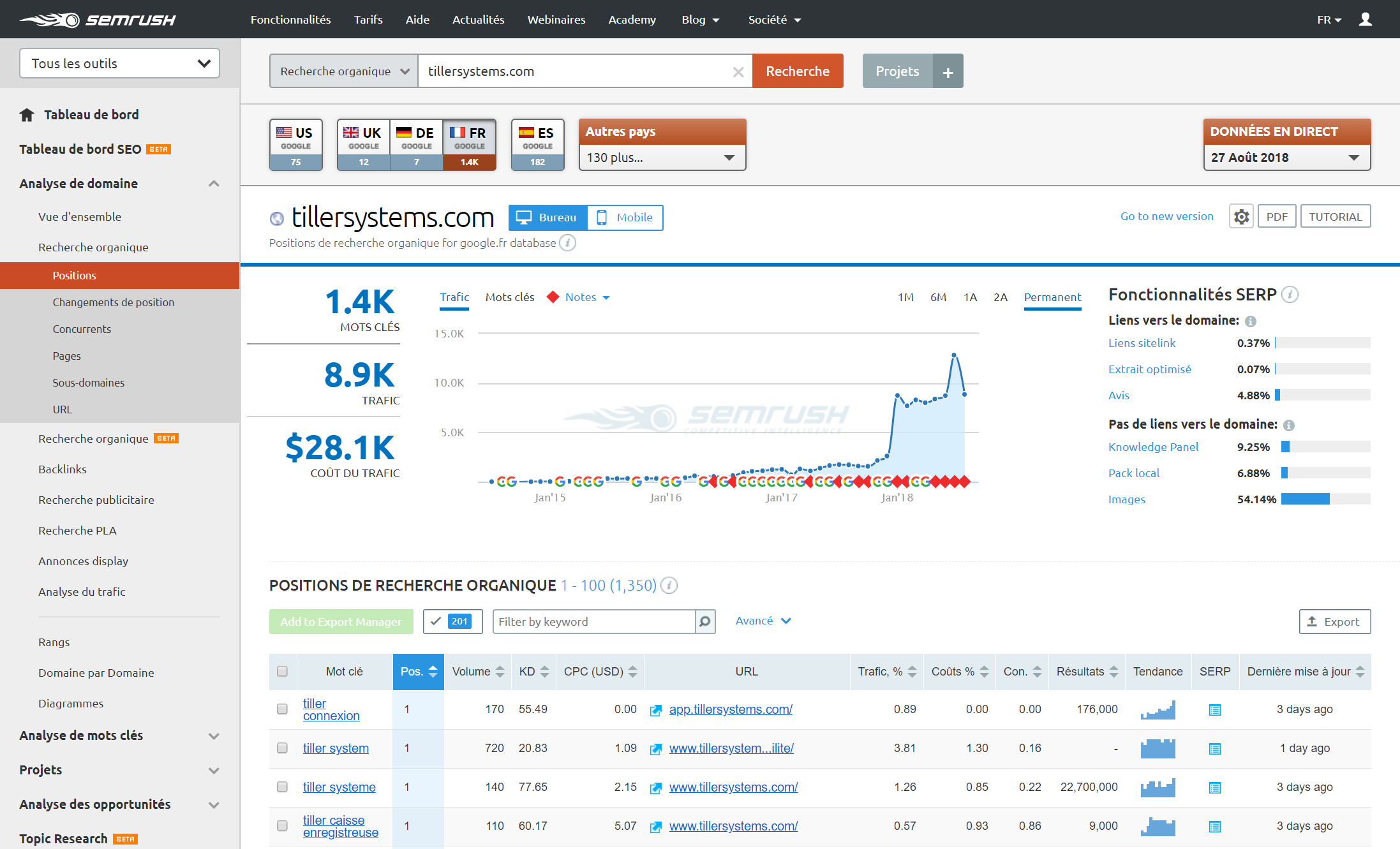
SEMrush also offers another feature which allows you to directly compare your site with up to 4 other competitors, which can be very practical for saving time.
2. Yooda Insight
The first tool to know is the French tool Yooda Insight which has one of the largest databases on keywords in French. The first interesting feature is in the “Leaders” tab.
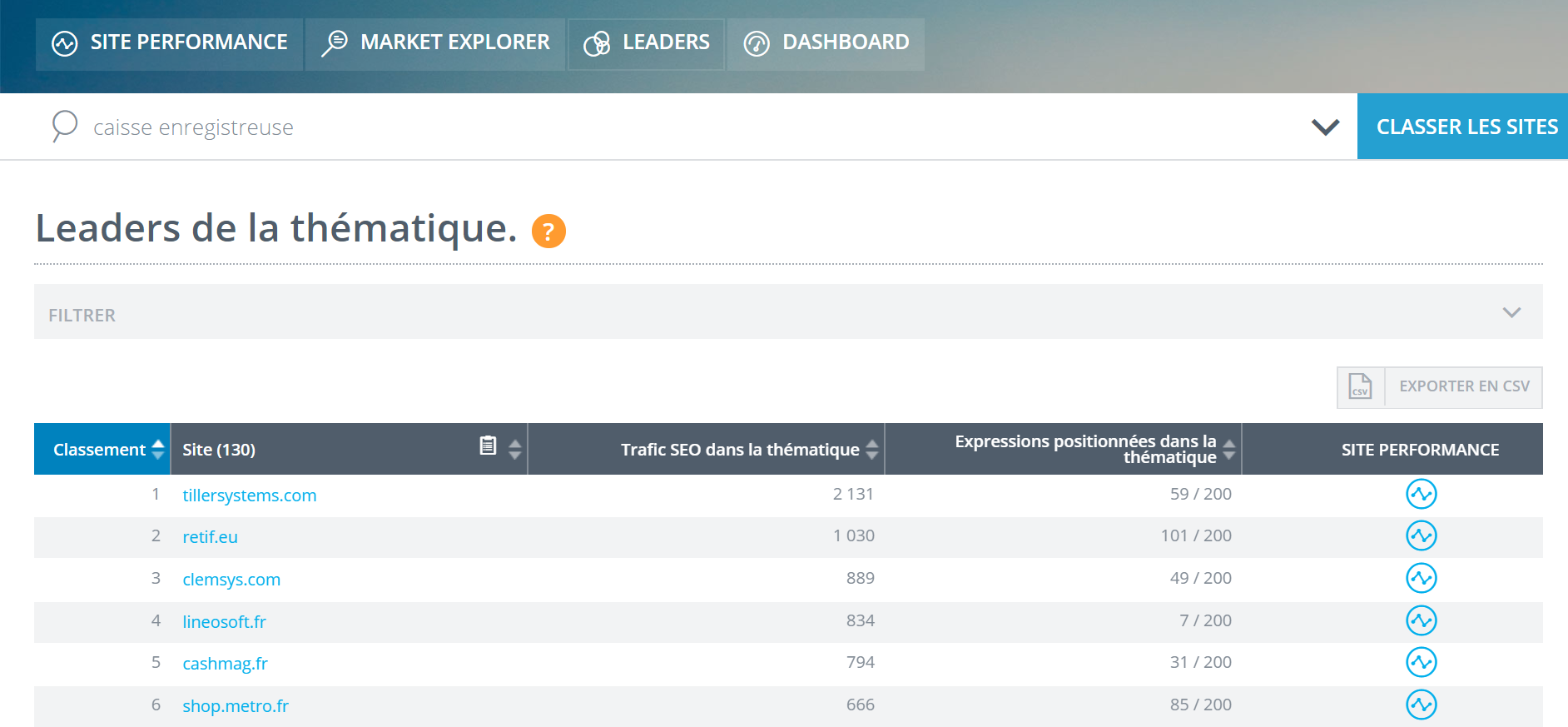
You will find all the sites dealing with the topic that interests you. Competitors are thus classified by number of keywords related to the main query you typed.
It is then the “Site performance” tab which will allow us to analyze all the keywords on which the site is positioned.
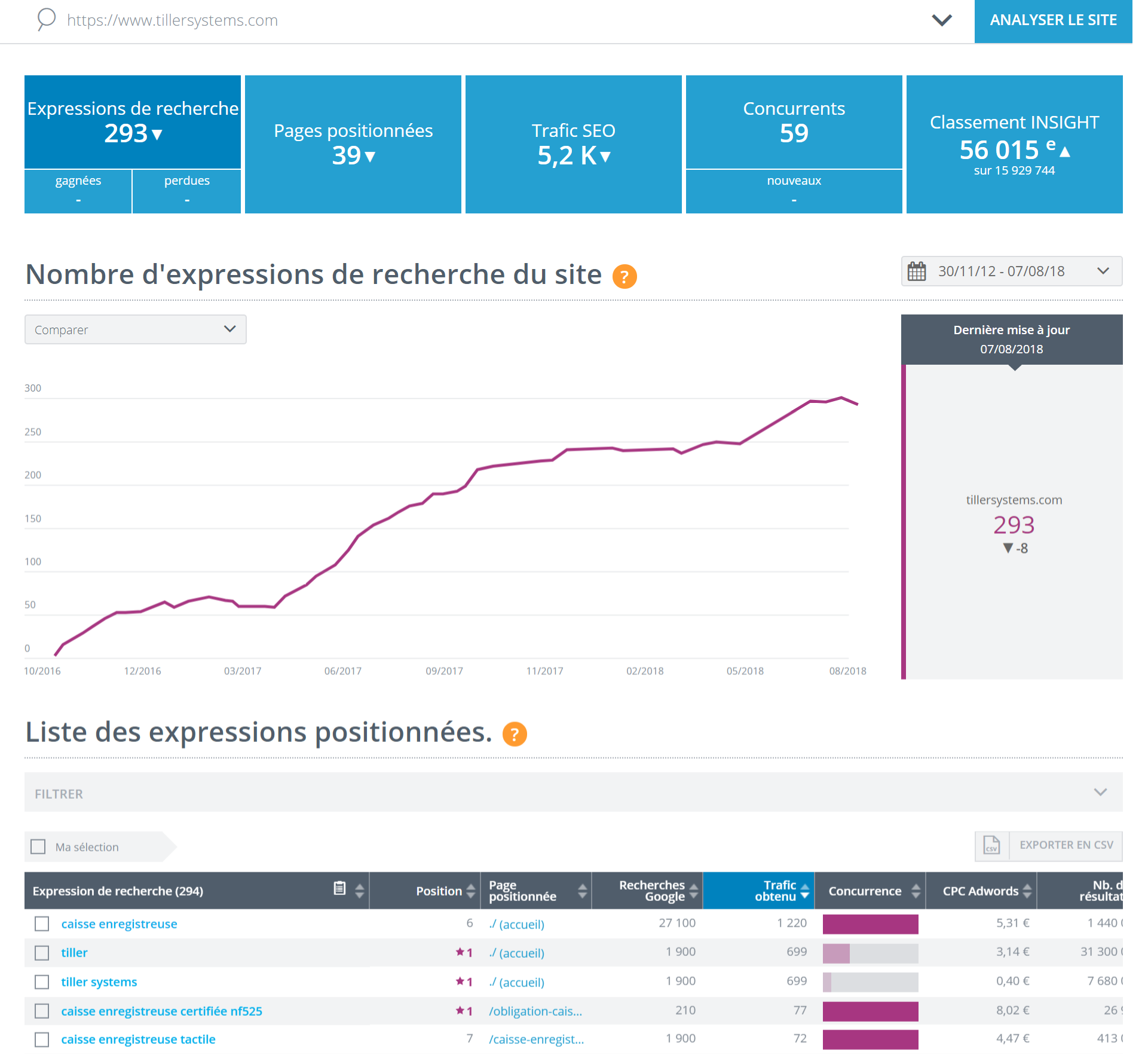
However, Yooda Insight is only limited to keywords on the first page of Google. So sufficient for a first list of keywords, but we will see that we can do better than that with other tools.
3. Ranxplorer
A newer tool that I use occasionally is Ranxplorer. This is another French solution that also has a very large keyword database.
In the “Natural results” tab then in “Keywords”, you will have all the site queries to analyze.
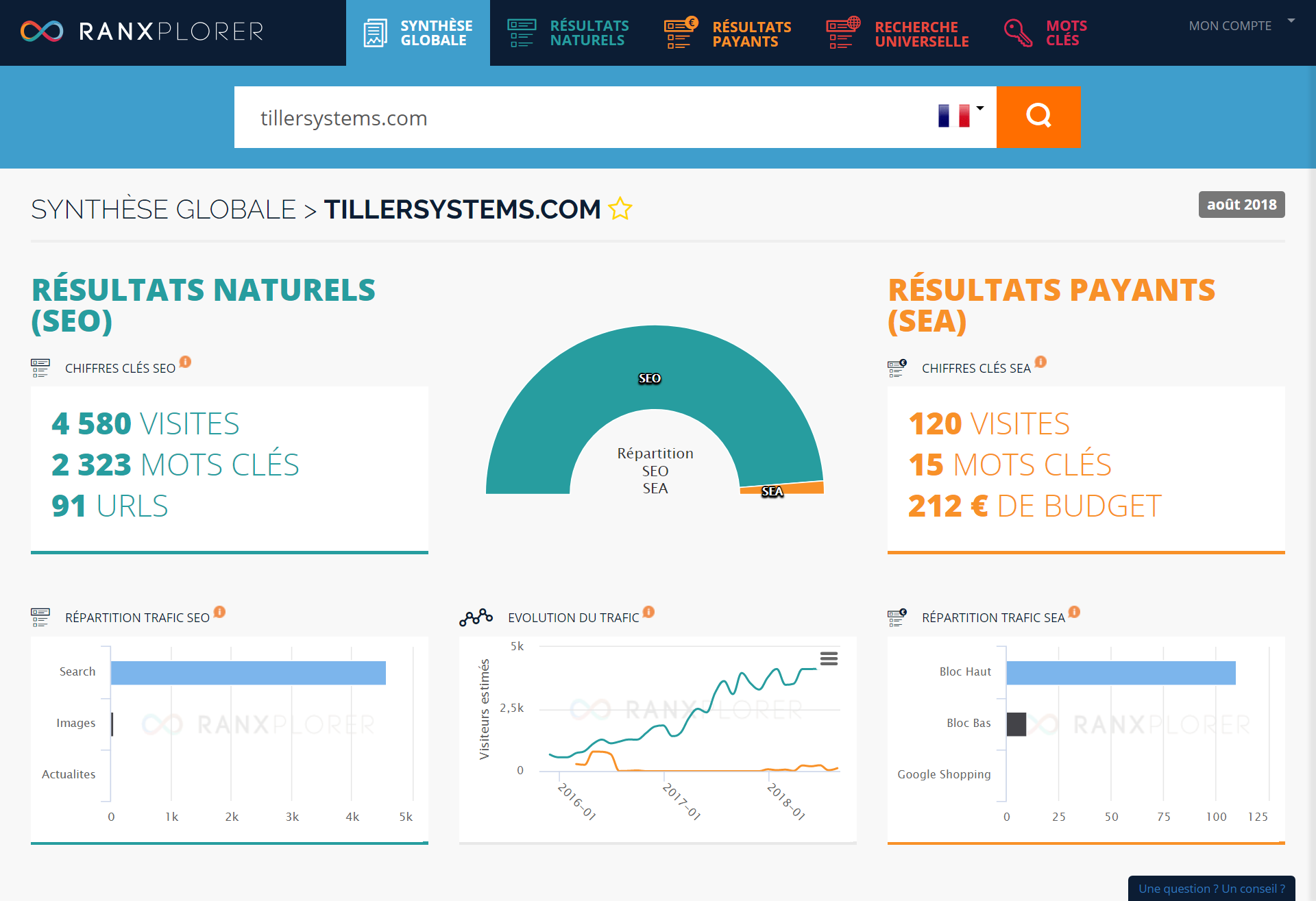
Another very practical feature is the ability to directly see all competitors and their keywords.
Step 2: Sort and select relevant keywords
Once you have exported your competitor’s keywords with your favorite tool, you will now need to identify those that are really interesting for you. For this, nothing better than the good old spreadsheet.
A fairly simple manipulation makes your file more readable to make sorting much faster, especially when there are thousands of lines to analyze. To do this, go to “Data” then “Sort”, put URL in ascending order and “Search volume” in decreasing order.
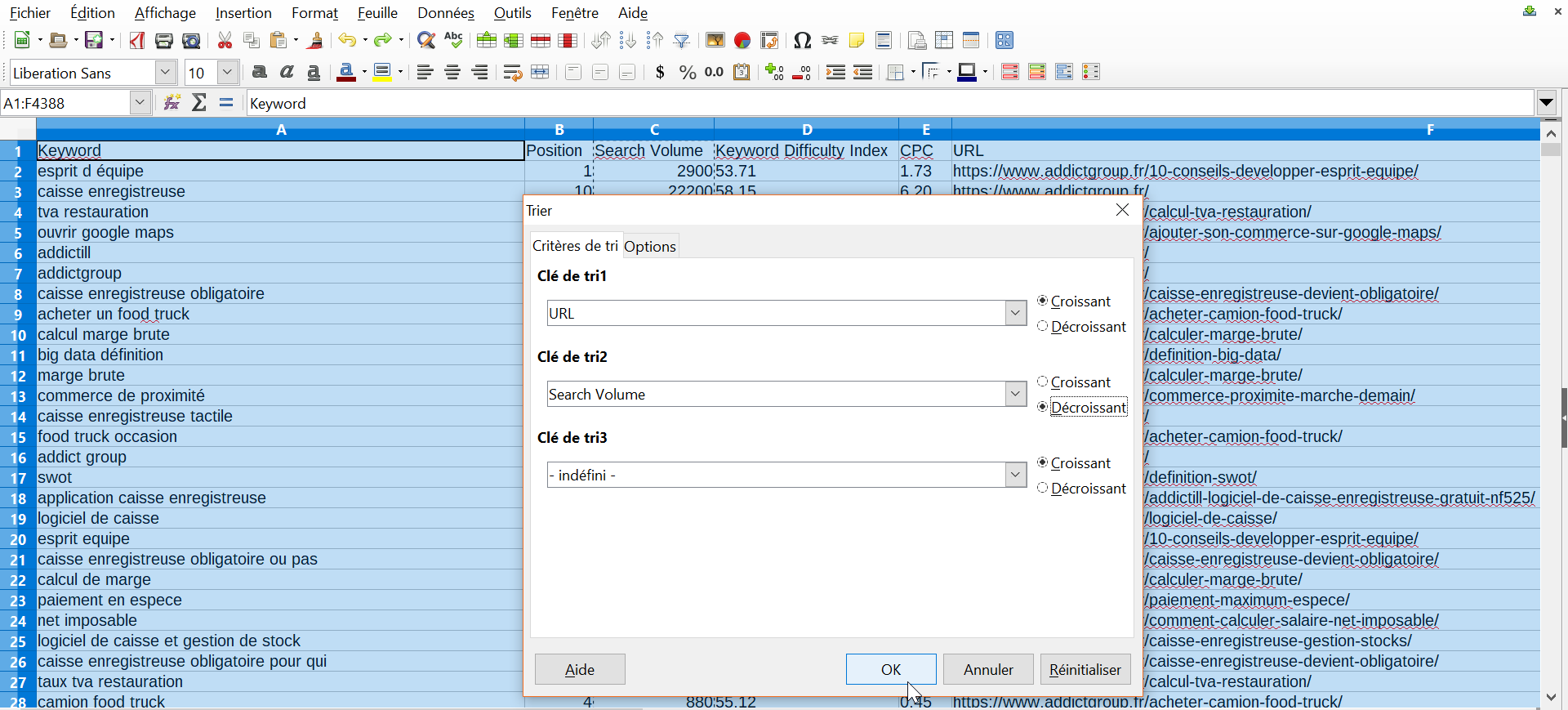
As a result, we end up with all the keywords grouped into clusters by URL and a better understanding of the site’s strategy.
Step 3: Check search intent and competition
The last step to complete your list of keywords is to check their relevance. There is no tool here, manual verification is almost essential in order to know how a given request can be processed while measuring the level of competitiveness.
Personally, I each time look at at least the first four sites positioned on the keyword concerned in order to understand how each one deals with it in order to inspire myself but above all to produce even more relevant and more exhaustive content than those of the competitors.
Conclusion
Finally, we must not forget that a good structure, in particular the establishment of a semantic cocoon, will give you a head start over your competitors.
In order to have an ultra-complete list of keywords, do not hesitate to analyze as many competitors as possible. This is how you will give yourself a greater chance of having a large volume of natural traffic on your site.
Similar articles