5 reasons why you need a newsletter
Last modified July 18, 2021
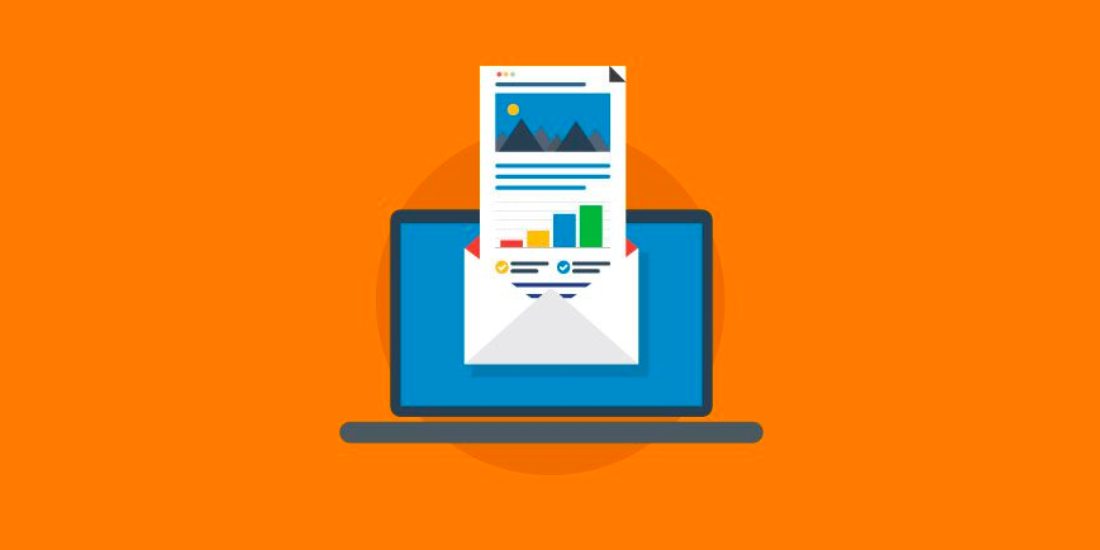
With the advent of social media and a multitude of new ways to market your brand and products online, many businesses are forgetting the power of email as a marketing channel. But the reality is that most people go online to check their emails more often than they shop online or visit social media. If you’re still hesitant about investing the time and effort into creating a newsletter, read on to see how beneficial email marketing can be for your business.
Newsletters are a great way for your business to communicate with customers and fans, and they can generate leads and sales that will help your business grow. Additionally, by using advanced email marketing software, you will be able to track your prospects and gauge their interest level. Here are some reasons why you should send a newsletter and some ideas on what you should include in it to make it effective.
The goal of a newsletter is to give the people on your list updates about your business, products, and services. However, this is not something that is typically used for a hard sell. An email newsletter should feel like an update from an interesting and helpful friend, rather than a pushy salesman. This does not mean that these newsletters are simply for keeping in touch. They can be used to motivate your customers to take action, for example by making a purchase or checking out your latest blog post. Newsletters are often the lifeblood of your marketing campaign. Over the past ten years, email marketing has proven to be much more effective than social media marketing.
To ensure the success of your email marketing campaign, you need to have a good plan. Part of this plan is running A/B tests to determine what works and what doesn’t, and email marketing platforms have metrics that can tell you whether your emails are working or not.
These measurements will tell you:
- How many people open your emails
- How many people click on the links in your emails
- How many people unsubscribe from your list
Pay attention to these measurements after each campaign. They will show you where you need to make adjustments and whether the changes you make are working. For example, if you have received many unopened emails and you decide to write a more personalized version for your next campaign, you should see an increase in your open and click-through rates.
According to Jay Baer of Convince & Convert, 44% of email recipients made at least one purchase in the last year based on a promotional email. It’s actually quite simple to understand why email marketing is so effective when it comes to sales. When a recipient views your email, you have the opportunity to highlight a product, explain its benefits and link it to a point of sale in just a few moments, if you sell online.
People are impulsive, and an incentive such as a coupon, special promotion, or even a call to action, like “Call us now,” can inspire your reader to take action.
You can communicate with your customers more easily
Your customers are busy people and they don’t spend all their time thinking about your business or brand. But despite this, they want to connect with the company and brands they love. Sending sales newsletters, however, encourages customers to think of you more often than they normally would. And when you send them content that applies to their lives, not just your business, they start to see you as an industry leader, not just another company.
So how do you deliver value, and why does it matter? People don’t buy because you sell. They buy because they trust you, are loyal to you, and are fans of your business. There are many ways to build that loyalty and connection through email. It could be a coffee shop’s newsletter about different beans and the best ways to prepare certain roasts. This could be a B2B company that shares business information of interest to their industry. If you communicate at the same time that you are selling, you establish a long-term relationship with your customers. That’s connection.
You increase traffic to your social networks.
According to a survey by GetResponse, emails that include social sharing buttons have a 158% higher click-through rate. Social media like Facebook, Twitter and LinkedIn are an integral part of your marketing and growth strategies. However, it can be difficult to develop these channels. Email newsletters are very effective for growing your online community. By starting a conversation in the inbox, where engagement is more targeted, and ending it in the social media arena, which has more reach, you will generate more activity on Facebook feeds and beyond .
Increase traffic to your website.
According to Salesforce, 82% of consumers open emails from companies. If you want people to visit your website, it’s not enough to hope that your customers gravitate to your site organically. Your email newsletter plays an active role in your site traffic and sales. You wouldn’t host a dinner party assuming the right people showed up. If you want people to stop by your site, browse your content, and buy, you need to invite, encourage, and entice them to come. There are many ways to do this, such as making a call to action and ensuring your emails are well targeted.
The biggest barrier to sending regular email newsletters is that many people view it as a chore. Creating a long, detailed newsletter is a good thing, but in most cases it’s unnecessary.
By choosing a single, simple goal for your newsletter, you can easily create it and stay on schedule, while avoiding wasting too much time. Single subject emails are also easy for readers to digest and follow, whether your goal is a monthly, weekly, or daily send.
By studying newsletter statistics and click-through rates, I discovered that in over 90% of emails, the first link is the one that receives the most clicks. For each subsequent link, the click-through rate is significantly lower than that of the previous link. This strongly implies that topics that follow your main subject in an email are considered superfluous. Instead of creating a long, tedious newsletter, send less content more regularly. For example, instead of sending a long monthly newsletter, you could try a shorter, bi-weekly or even weekly newsletter.
So here are the 5 reasons why you need to start sending a newsletter to your client. Planning to send your newsletter now? If so, I hope you get the most out of it!

Passionate about the web and entrepreneurship, I founded Digitiz in 2016. My goal is to pass on my experience to you and to be able to save you time in choosing your tools.
Similar articles