[SEO] The importance of nofollow links for Google SEO
Links have always been essential elements of natural referencing. In 2020, this is more than ever the case.
SEOs see links in several aspects. First, depending on the power SEO/credibility that this link will transmit and then depending on the traffic that it will generate.
By perfectly combining internal links and backlinks, you will put all the chances on your side to be better referenced on Google, although these elements are not the only determinants of your ranking.
Today, there are a lot of rumors floating around on the web around nofollow links, some say that they are useless, others find them very useful.
But what is it really? How strong are they really in 2018?
“Dofollow” vs “nofollow” links: What is the difference?
Search engines like Google follow every link by default unless you tell them otherwise.
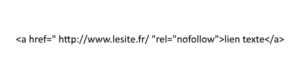
You can tell search engines not to follow a certain link by using the nofollow attribute. As in the example below:
Google is not likely to punish you as long as the links you place in your content are useful and relevant.
However, there are times when you will need to systematically put links in nofollow.
When should you insert a nofollow link tag according to Google?
To prevent Google from doing manual actions on your site aka penalizing you, make sure to put a nofollow tag in the following cases:
- Paid links
- Product links
- Affiliate links
- Links from untrustworthy sites
- Links in widgets and images
In case you agree to put a paid link on your site, be sure to specify that you will not follow it.
Google does not recommend using paid links. So, if you don’t want to feel the “wrath” of Google, remember to nofollow all paid links.
It’s much the same story with links you agree to place on your website in exchange for a product or service.
All affiliate links must be nofollow by default.
Google recognizes that these links have the potential to generate revenue and they do not want to offer additional benefits to sites that participate in affiliate programs, period.
If you want to link to an untrustworthy site on your website, consider inserting the nofollow tag. If you don’t do this, it can seriously penalize your site.
It is important to nofollow links in widgets and images that you propose to integrate on your site, such as logos (social networks), icons, shareable design elements, etc.
Of course there are other cases where it is important to put a nofollow tag on your link, however, the previous cases represent the majority of use cases.
Why are nofollow links important?
Google often insists that it does not transfer PageRank aka SEO juice when it detects a nofollow link. However, Google doesn’t always follow its own rules and likes to mislead us.
Indeed, sometimes Google makes an exception to track and count links with a nofollow tag. This can be the case with Wikipedia, for example.
Although every link placed on Wikipedia is a nofollow link by default, if you get backlinks from Wikipedia, prepare for a boost in your rankings.
But I don’t understand, Google said that nofollow links have no SEO weight…
Yes, but in all likelihood Google thinks that a high-quality website like Wikipedia can’t afford to link to low-quality websites (which is true), and automatically counts its links to adjust the SERPs, regardless of the tag.
Nofollow links count.
Links from reliable sites make a difference no matter what tag you put on them.
Additionally, nofollow links on less trusted sites are still important because they bring traffic and potential users that you can still try to convert into customers.
Treat each link as an endorsement that builds credibility and increases engagement.
The important thing to remember here is that your funnel needs to be set up well and ensure that it converts quickly/easily.
In addition, a link, whether dofollow or nofollow, placed in a coherent context, will increase your credibility in the eyes of Google.
Last but not least, links always lead to more links. If a nofollow link pointing to your content is placed on a trustworthy website, your website could receive dozens of dofollow links in the near future.
Users will simply treat your link as useful and relevant and share it or use it in their own content.
Convinced ?
Conclusion
It is true that dofollow links bring SEO weight more important to your website, but nofollow links should not be neglected either, especially from reliable sites.
Whether dofollow or nofollow, remember to optimize your link anchors. Which will give you even more credibility (be careful not to over-optimize)
Nofollow links have many virtues such as:
- Increasing your credibility.
- The development of the trust that Google has in you and in the eyes of Internet users.
- Redirecting traffic to your site.
- Increasing your customer base.
So the next time you see a nofollow link redirecting to your site, don’t complain or get frustrated.
Even if nofollow links do not directly improve your SEO (except from high quality sites), they remain valuable credibility and conversion levers.
Again, links are a great way to improve your SEO but there are many other aspects to improve as well.
Just make the most of every nofollow link, and you’ll quickly make a difference in the SERPS and your awareness, one way or another.