Multichannel, crosschannel, omnichannel: What are the differences?
Last edited on July 18, 2021 by Digitiz
The terms multichannel, cross-channel and more recently omnichannel are often mentioned when it comes to creating points of contact between a company and its customer. Unfortunately, these are frequently conflated and used wrongly. A quick summary is necessary to make the difference!
From multichannel to omnichannel
The choice of meeting points between a company and its client has always been an important criterion for the successful development of an activity. In the multimedia era, these places of exchange have greatly multiplied. Brands have had to develop new approaches and adapt to new tools. Today, you must establish distribution processes that thoroughly meet consumer needs.
Multichannel: the basis of any digital strategy
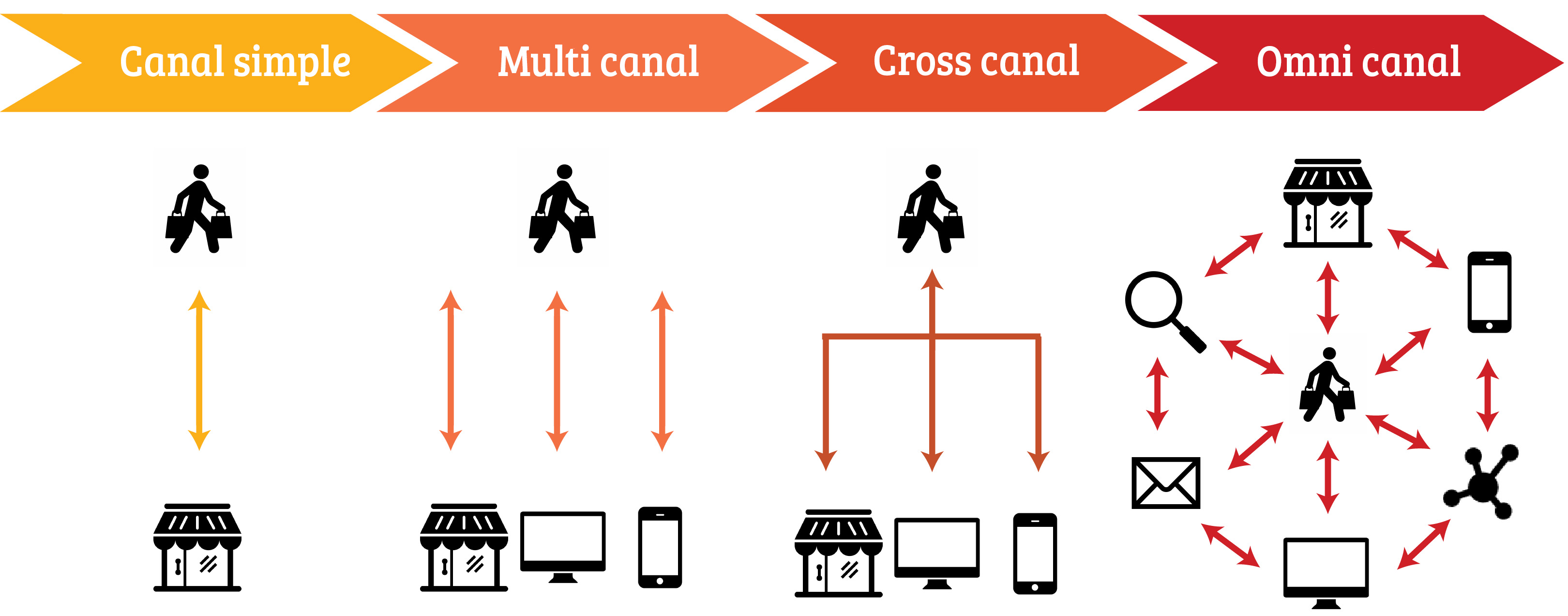
This strategy consists of using several independent distribution channels to market a product or service. The goal of this diversification is to grow your business by delivering on many fronts. In principle, multichannel is adopted by physical stores that wish to sell their products on the Internet.
In this context, the creation of an e-commerce site allows them to create a new point of contact with consumers, thus offering them the opportunity to increase their customer base. However, the opposite path is also possible. Many brands initially specializing in online sales have opened brick-and-mortar stores to meet the expectations of their customers, including CDiscount and LDLC.
Each distribution channel therefore targets a particular segment of consumers. Certainly, this particularity makes multichannel highly attractive for boosting your turnover, however it represents some disadvantages. By working in silos, these different channels naturally tend to behave independently. Internal communication will then lose efficiency and sales could be penalized.
The move to cross-channel
This strategy is the logical continuation of multichannel. The idea is to streamline the consumer journey by integrating all distribution channels. In practice, it is about offering the buyer a unique experience that allows them to move from one channel to another without difficulty. To do this, you must coordinate its actions by establishing a well-structured and coherent distribution process. The ideal is to create a certain complementarity between the different channels to put the consumer at the heart of an interactive network.
Among the many examples of a cross-channel strategy, we can cite the click-and-collect or web to store method, which allows your customers to place their orders on the Internet and collect them in store. In this scenario, they make their purchases via their phone or computer and discover the experience of being in your physical store.
Omnichannel: the perfect alternative
This is the ultimate in customer relations. Typically used in connected stores, this discipline combines distribution channels into a single experience. It meets the consumer’s need to be everywhere at once. While in your store, they will rely on specific applications and tools to identify themselves, know the characteristics of the products you sell and make their purchase. Conversely, you can use the data collected to offer them relevant and personalized offers.
Note that the ominacal strategy makes it possible to overcome the problem of marketing silos. Even better, it offers you the opportunity to get to know your targets better and establish a close relationship with them. At this stage, the buyer benefits from an unrivaled purchasing experience that reflects the DNA of your brand.
The challenges of multichannel, crosschannel and omnichannel
As you will have understood, the adoption of these methods is essential to improve your customer relations. However, their implementation is much more complex than it seems. In fact, you will have to restructure your entire organization if you intend to take action. And your governance policy will be the first to be impacted, especially if you decide to use omnichannel. Your operational teams will have to face a new organization, a new organizational chart and probably new budget lines. Various departments will have to mix or merge, which is sure to cause some difficulties.
Once launched, your project will face another challenge: training your teams to deal with this new environment. You should know that technology, like consumer behavior, is constantly evolving, requiring you to continually update the capabilities of your employees. Taking the example of a salesperson, you will agree that it is essential that they know how to easily handle the applications and technological devices that you will use in your store. Otherwise, he will not be able to meet the expectations of his interlocutor, who in turn will miss out on the experience that you have painstakingly concocted.
The final challenge to overcome concerns your logistics. Whether it is creating a physical store to accompany your e-commerce site or setting up offices to accommodate your online operators, you must ensure that your company has the means to be present on the different distribution channels .
Similar articles